During a recent interview of Anthony Weiner on The Adam Friedland Show, Frieland asked about Weiner’s mother, referring to her as an educator. Weiner responded by repeating that she was a teacher. Likely not understanding the evolution in words, the two then had a short spat arguing over the terminology.
This was an interesting disagreement because in recent years the term educator has become increasingly popular. Likewise, the term learner is slowly replacing the term student. So why is this happening, and what is the difference between an educator and a teacher?
The slow shift from student/teacher to learner/educator originates with the Marxist philosopher Paulo Freire. His stupid book, The Politics of Education, lays out the terminology shift that is meant to level the hierarchy, or power difference, between students and teachers. A teacher is someone who has education credentials such as a college degree and/or a breadth of relevant experience, whereas an educator is a person who can teach people things, but does not necessarily have certifications, credentials, or extensive experience. Replacing teacher with the term educator is subtly demeaning as it removes the professional prestige from the term teacher, and enables nearly anyone to step into the role. For example, when talking about fishing, after having gone only once, a seven-year-old student could share his lived experience, become the educator, and would be considered an authority on fishing. Freire believed that educators and learners should collaborate together to construct knowledge, rather than the teacher transmitting information unilaterally to an unknowledgeable student. In his Marxist framework, this is meant to bring about a more equitable power dynamic in the classroom.
In a socialist system, which equity in education is geared towards, everyone is equal. It is unacceptable to have someone in a superior position over someone else, and this includes the relationship between children and adults. That is the underlying goal of the evolution of this terminology, but is not the only way the hierarchy between students and teachers is being removed.
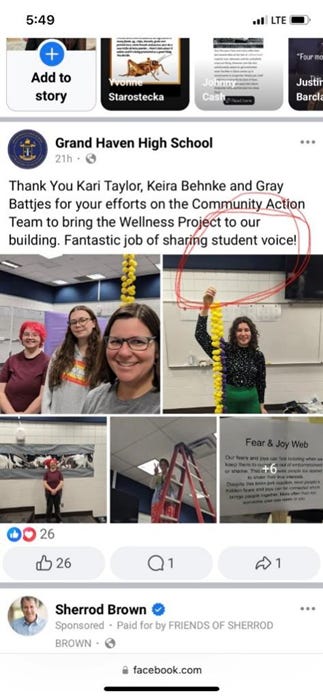
In Grand Haven, when searching for a new superintendent, candidates were specifically asked how they would incorporate student voice should they be selected for the position. The concept of student voice fits well with the educator/learner paradigm. According to CASEL’s Strategies for Elevating Student Voice:
“Elevating student voice isn’t just about hearing from young people. It is about sharing power and ownership and being transparent about the process as well as the results.”
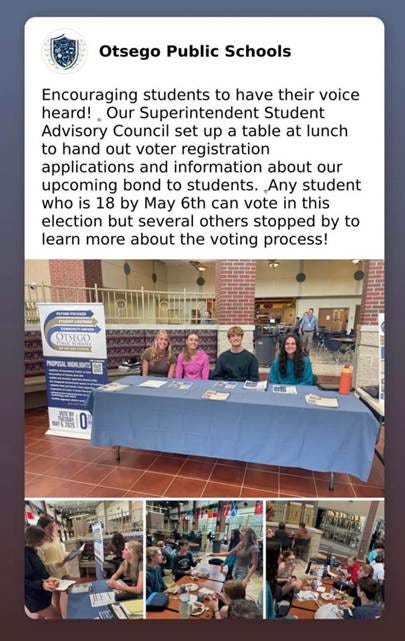
Today GHAPS has Superintendent Advisory Councils comprised of students which were formed “in November at Grand Haven High School, Central High School, and Lakeshore Middle School to gather more in-depth student input.” Additionally, the GHAPS board of education has discussed the idea of adding a student to the board.
Adultism is the idea that children are systematically discriminated against and oppressed by adults. It is similar to racism, in that one group of people discriminates against another group. Rather than recognizing the natural parent-child relationship, the belief in adultism demands children to be viewed as equals to adults and any effort that disempowers a child is oppressive. This undermining of natural family hierarchy is part of a program sponsored by Grand Haven Area Public Schools (GHAPS) and offered to homeschooling families and another way the power dynamic between children and adults is being leveled.
Words matter. Children need guidance and direction to help them become capable, independent adults. Most teachers worked hard putting in both time and effort to get to where they are in their careers today, and it’s interesting that the local union still refers to them as teachers. The Professional Negotiation Agreement between GHAPS and the Grand Haven Education Association doesn’t mention the word ‘educator’ even once.
As a child, my dad certainly did not think I was his equal. Did yours? Do you think 2nd graders should collaboratively construct knowledge with their educators? Don’t use Freire’s demeaning Marxist educator/learner terminology. As a community invested in public education, we hire teachers to teach students, and we expect teachers to be in a position of undisputed authority over students.